
 Save
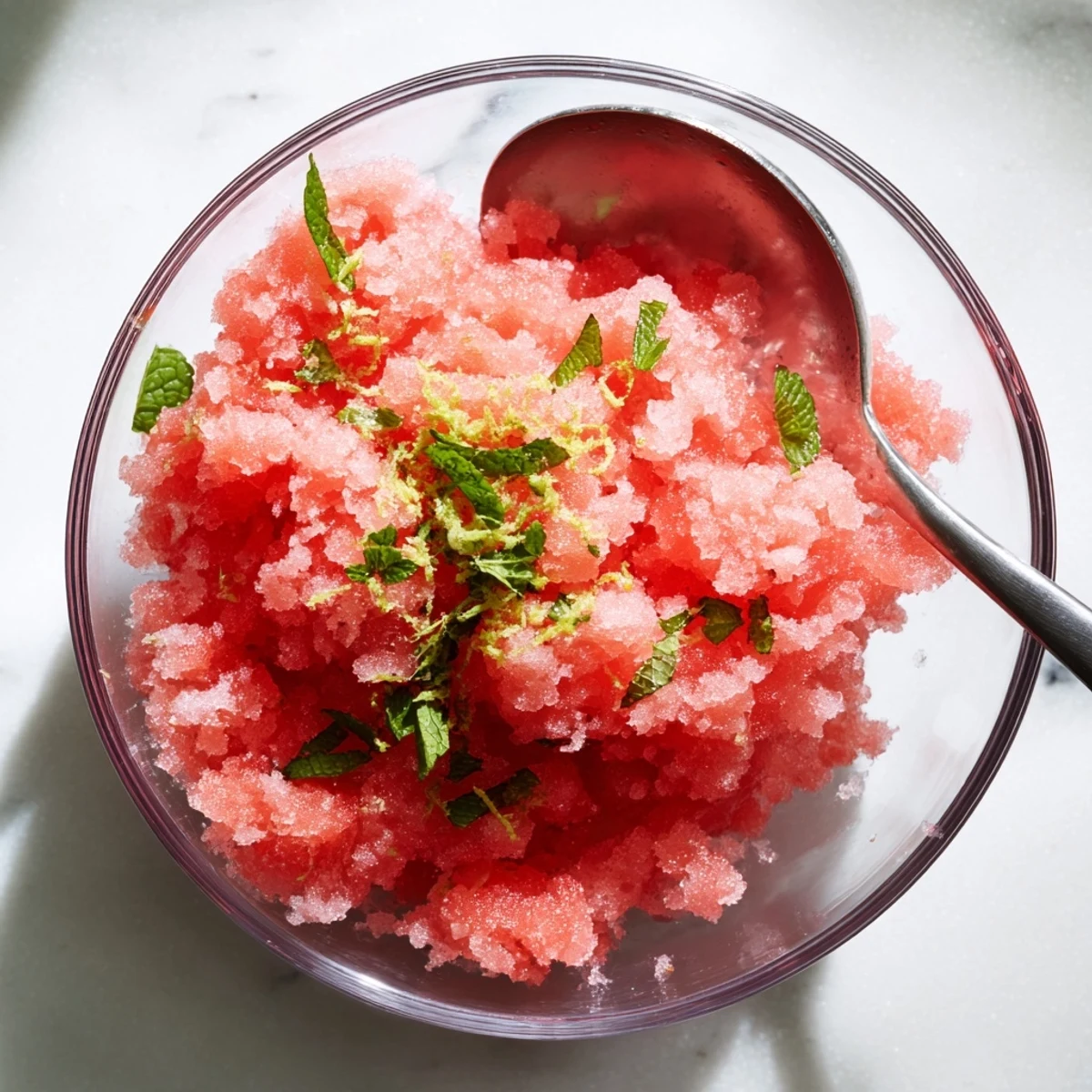
Save This watermelon granita delivers pure summer refreshment in every spoonful. With just three main ingredients—fresh watermelon, lime juice, and sugar—you can create an elegant frozen treat that feels indulgent yet light. The process is beautifully simple: blend, freeze, and periodically scrape with a fork to create those signature fluffy ice crystals. Perfect for serving at barbecues, dinner parties, or whenever temperatures rise.
The natural sweetness of watermelon shines through, enhanced by bright citrus notes from fresh lime. Each serving contains only 65 calories, making it a guilt-free way to satisfy sweet cravings. For added sophistication, incorporate fresh mint or experiment with different citrus variations. The texture transforms from slushy to perfectly crystallized after several hours in the freezer, resulting in a restaurant-quality dessert that requires minimal effort.
The air was heavy with July humidity when my neighbor Sarah brought over an enormous watermelon from her garden patch. We stood on her back porch eating slice after slice, juice dripping down our arms, laughing about how summer always tastes better when someone else grows the fruit. That afternoon inspired this granita, which became our go-to cooling solution for every backyard gathering that followed.
Last summer I served this at my dads birthday party in vintage champagne flutes I found at a thrift store. The kids kept sneaking back to the freezer bowl with their forks, and by the time we cut the cake, half the granita had mysteriously vanished. My dad still talks about that pink icy dessert more than the actual birthday cake.
Ingredients
- Seedless watermelon: Five cups gives you enough liquid volume to create those signature fluffy crystals without ending up with a thin slushy
- Fresh lime juice: The acidity cuts through the natural sweetness and brightens everything like sunshine on a cloudy day
- Granulated sugar: Even though watermelon is sweet, a bit of refined sugar helps achieve the perfect crystalline texture
- Fresh mint leaves: This optional addition makes the whole thing taste garden fresh and surprisingly sophisticated
Instructions
- Blend until silky smooth:
- Pile those watermelon cubes into your blender with lime juice and sugar, then let it run until you can not see any remaining pulp
- Taste and tweak:
- Take a small spoonful to test the sweetness level, remembering that frozen things taste less sweet than room temperature ones
- Spread and freeze:
- Pour everything into a shallow dish that will fit in your freezer, spreading it evenly so it freezes at the same speed throughout
- First scrape:
- After ninety minutes, run a fork through the surface, breaking up any ice crystals that have started to form
- Repeat the magic:
- Every thirty minutes for the next few hours, keep scraping until the mixture transforms into light and fluffy crystals
- Serve immediately:
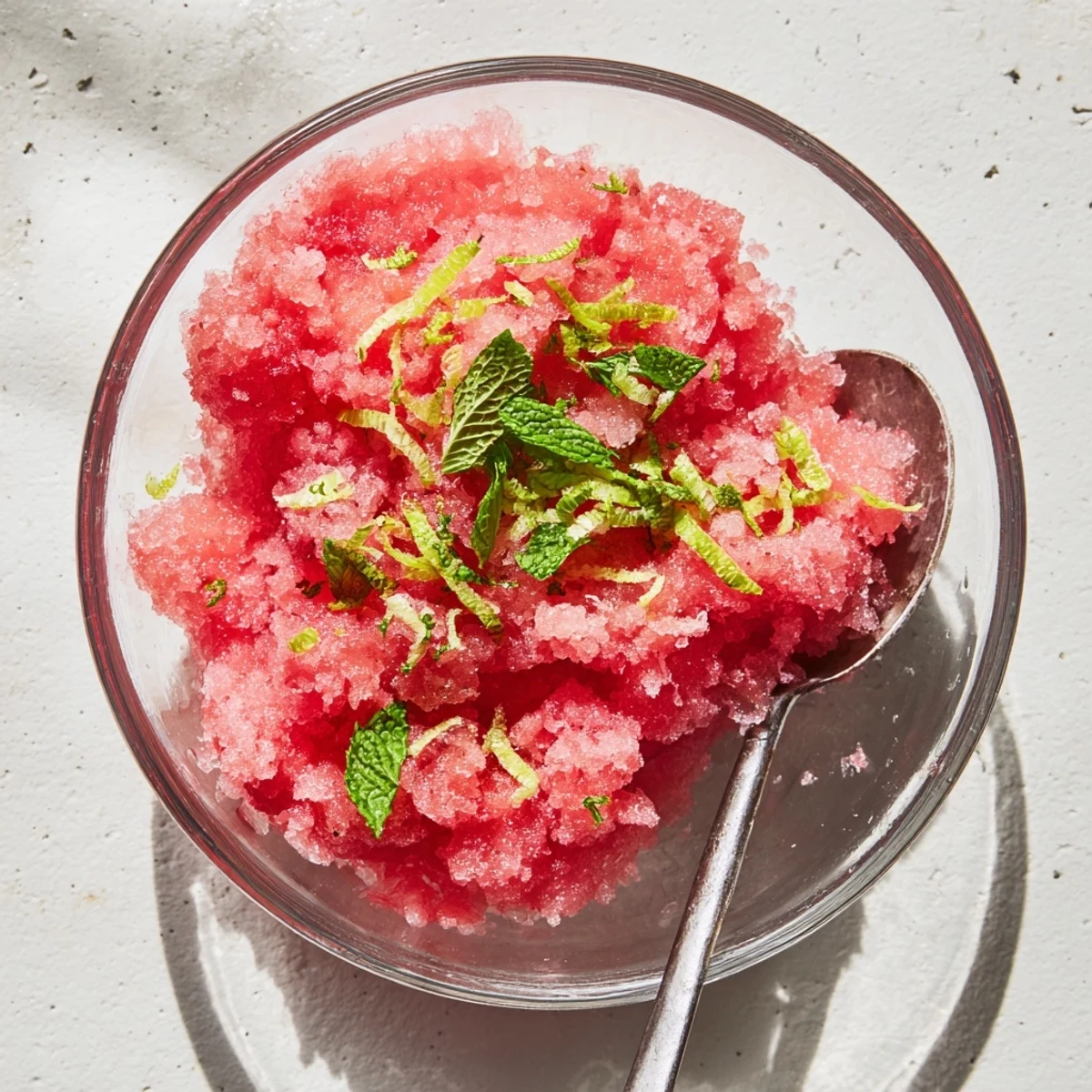
- Scoop into chilled glasses and garnish with mint or lime zest because pretty food just tastes better
 Save
Save This recipe saved me during that week when my air conditioner broke and I refused to turn on the oven. My teenage son started requesting it as an after school snack, and suddenly I was making double batches just to keep up. It became our little cool down ritual during the hottest month of the year.
Making It Your Own
The beauty of granita lies in its adaptability. Once you master the basic technique, you can spin endless variations using whatever fruit is in season or whatever flavor combination sounds good in the moment.
Serving Suggestions
While granita needs nothing more than a spoon to be delicious, thoughtful presentation elevates it from dessert to experience. Consider the vessel and any complementary flavors that might enhance the main event.
Storage and Timing
Granita keeps beautifully for several days when properly stored, but the texture is at its absolute best within twenty four hours of that final scrape. The longer it sits, the larger the ice crystals become.
- Press a piece of parchment directly against the surface to prevent freezer burn
- Let it soften for five minutes before serving if it has been frozen longer than a day
- Scrape again with a fork right before serving to refresh the texture
 Save
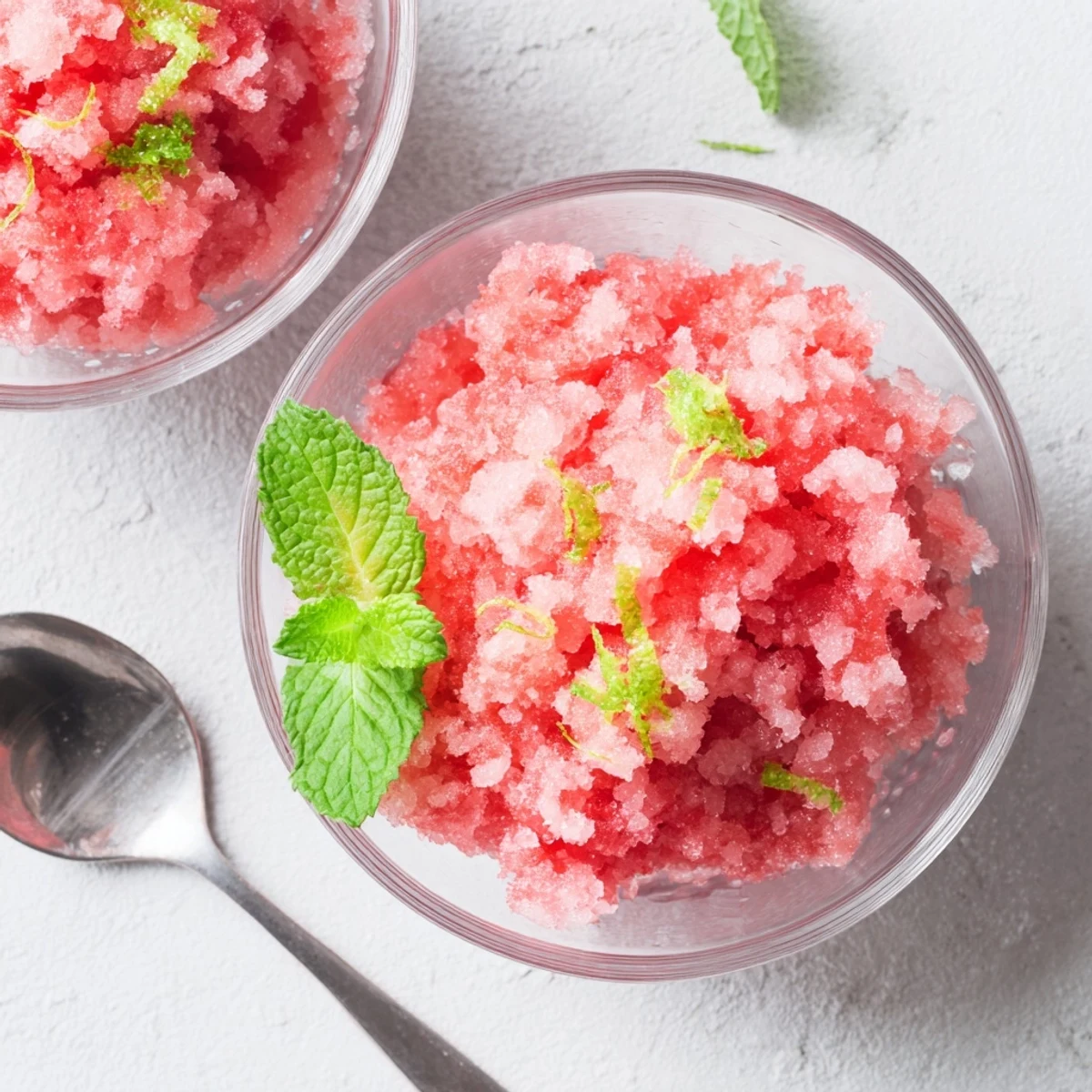
Save There is something profoundly satisfying about transforming simple fruit into something that feels fancy and special. This granita captures everything we love about summer in a spoon.
Recipe FAQs
- → What makes granita different from sorbet or ice cream?
-
Granita has a coarse, crystalline texture achieved by periodically scraping the freezing mixture with a fork. Unlike ice cream, it contains no dairy or cream. Compared to sorbet, granita is icier and less smooth, offering a unique mouthfeel that's incredibly refreshing.
- → Can I use frozen watermelon instead of fresh?
-
Fresh watermelon works best for achieving the right water content and texture. Frozen watermelon may alter the freezing process and result in a less crystalline final product. Stick with fresh cubes for the most authentic granita experience.
- → How long does homemade watermelon granita last in the freezer?
-
Properly stored in an airtight container, your granita will maintain its best quality for about 1-2 weeks. Over time, ice crystals may become larger and texture less fluffy. Simply scrape again with a fork before serving to refresh the consistency.
- → Is this dessert suitable for people with dietary restrictions?
-
Absolutely. This watermelon granita is naturally vegan, gluten-free, dairy-free, and free from common allergens including nuts, eggs, and soy. It's an excellent option for serving diverse groups where dietary needs vary.
- → Can I reduce or substitute the sugar?
-
Yes, you can adjust the sugar to your taste preferences or substitute with honey, maple syrup, or agave nectar. Keep in mind that sugar helps create the right texture, so reducing it too much may affect the final consistency. Natural fruit sweetness varies, so taste before freezing.
- → What's the purpose of scraping every 30 minutes?
-
Regular scraping breaks up forming ice crystals, creating granita's signature fluffy texture. Without this step, you'd end up with a solid block of flavored ice. The fork action incorporates tiny air pockets, making each spoonful light and crystalline rather than dense or hard.