
 Save
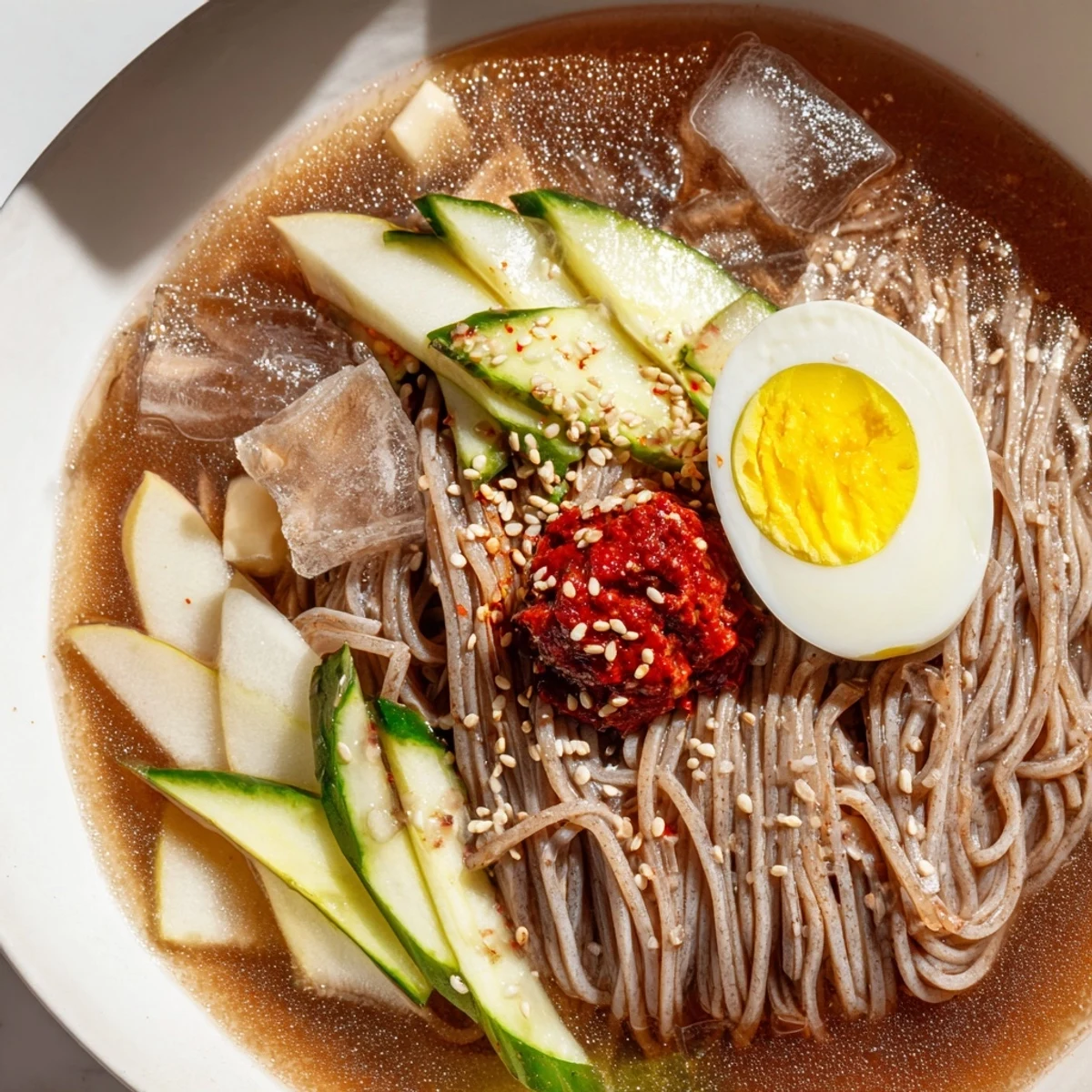
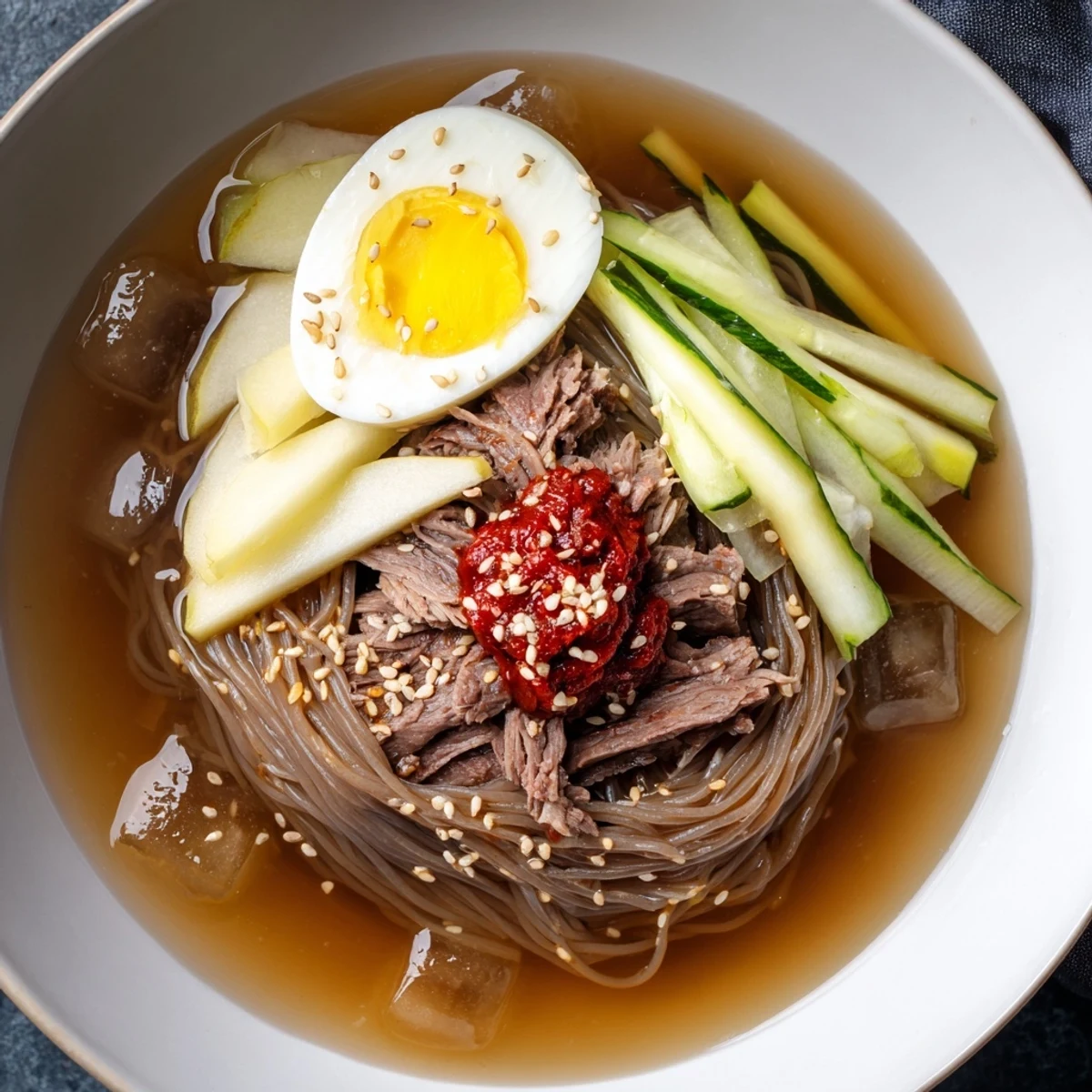
Save Korean naengmyeon delivers a refreshing dining experience with its signature cold preparation and chewy buckwheat noodles. The tangy broth balances beef stock with rice vinegar and sesame oil, creating a perfect harmony of flavors. Topped with Asian pear, cucumber, beef brisket, and hard-boiled eggs, each bowl offers layers of texture and taste. The dish comes together in just 40 minutes, making it ideal for summer meals when you crave something cooling yet satisfying. Traditional Korean restaurants serve this with ice cubes to maintain the chilly temperature that makes naengmyeon so distinctive.
My first encounter with naengmyeon happened during a sweltering July afternoon in Seoul, when my friend dragged me into a tiny basement restaurant that smelled like vinegar and something wonderful I couldn't name. The bowl arrived steaming cold with actual ice cubes floating on top, and I remember being genuinely confused about how soup could be both freezing and deeply satisfying at the same time. Now whenever summer heat becomes unbearable, my kitchen fills with that same sharp, tangy aroma as the broth chills in the refrigerator.
Last summer, I made this for a backyard barbecue when the temperature hit ninety degrees and nobody wanted to eat heavy grilled food. I watched my normally skeptical uncle take his first bite, his eyes widen, and then proceed to finish his bowl in record time while asking for the broth recipe. Theres something deeply satisfying about watching people discover that cold soup can be just as comforting as the hot stuff.
Ingredients
- Beef broth: Homemade or low sodium works best since you will be seasoning it heavily anyway
- Cold water: Essential for diluting and chilling the broth to the right temperature
- Rice vinegar: This is what gives the soup its signature tangy kick
- Sugar: Balances the vinegar and creates that perfect sweet sour harmony
- Sesame oil: Just enough adds a subtle nutty background note
- Naengmyeon noodles: These chewy buckwheat noodles are what make the dish authentic though soba works in a pinch
- Asian pear: Adds natural sweetness and a refreshing crunch that cuts through the rich broth
- Ice cubes: Not optional they keep the soup brutally cold the way its supposed to be
Instructions
- Make the broth ahead:
- Whisk everything together until the sugar and salt completely disappear then stash it in the fridge for at least an hour
- Prep like a restaurant chef:
- Boil those eggs for exactly ten minutes slice your beef paper thin and cut that cucumber and pear into delicate ribbons
- Cook the noodles:
- Boil them for three to four minutes then rinse under freezing cold water until they are literally cold to the touch
- Build each bowl:
- Start with the noodles ladle over that icy broth and arrange your toppings like you are plating at a Korean restaurant
- Finish with ice:
- Toss in those ice cubes right before serving so the soup stays teeth chattering cold
 Save
Save My grandmother visited from overseas last winter of all times and requested this dish, proving that naengmyeon cravings know no season. I served it in chilled bowls with snow falling outside the window, and she declared it nearly perfect except for needing more vinegar, which she proceeded to add with the confidence of someone who has made this recipe a thousand times.
Making It Your Own
After making this countless times I have learned that the broth is incredibly forgiving and welcomes experimentation. Dongchimi brine from radish water kimchi adds a funky fermented depth that turns good into great, though it can be hard to find outside Korean markets.
Getting The Texture Right
The noodles should be chewy and springy never soft or mushy. Rinse them aggressively under cold water until the water runs completely clear and the noodles feel cool and bouncy when you squeeze them.
Serving Like A Pro
Traditional Korean restaurants serve naengmyeon in chilled metal bowls that frost over from the cold. Garnish with gochujang on the side so diners can control their own heat level and serve with kitchen scissors because these noodles are notoriously long and tricky to manage.
- Chill your serving bowls in the freezer for twenty minutes
- Set out extra vinegar and mustard at the table
- Cut the noodles a few times with scissors before eating
 Save
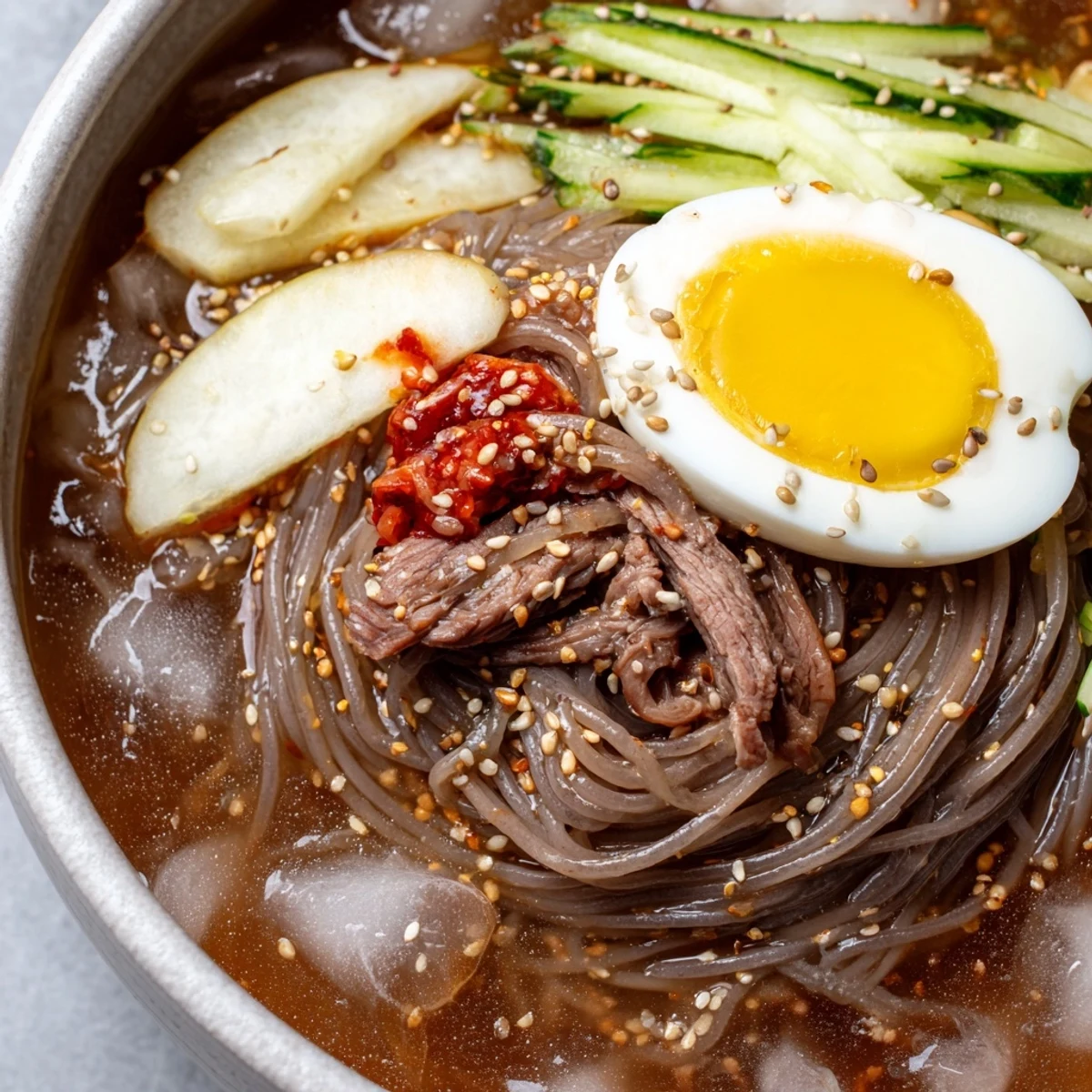
Save There is nothing quite like slurping icy noodles on a hot day while sweat trickles down your back and the sweet tangy broth hits your tongue. This is the soup that makes summer bearable.
Recipe FAQs
- → What makes naengmyeon noodles special?
-
The distinctive texture comes from buckwheat and sweet potato starch combination, creating noodles that are simultaneously chewy, slippery, and springy. This unique mouthfeel is essential to the authentic experience.
- → Can I substitute the beef broth?
-
Pork or chicken broth work beautifully as alternatives. For a lighter version, vegetable broth creates a delicate base that still pairs well with the vinegar and sesame elements.
- → Why is serving temperature important?
-
Naengmyeon must be served ice-cold to achieve the refreshing character that defines this dish. Chilling bowls beforehand and adding ice cubes directly to the broth ensures the optimal temperature.
- → What can I use if I can't find naengmyeon noodles?
-
Soba noodles made from buckwheat provide the closest alternative. While the texture differs slightly, they still deliver the earthy flavor profile that complements the cold broth.
- → How do I adjust the tanginess level?
-
The rice vinegar quantity controls the tangy element. Start with the suggested amount, then add small increments to reach your preferred balance of sour against the savory beef broth.
- → What's the purpose of Asian pear in the topping?
-
The crisp, sweet pear offers a refreshing crunch that contrasts beautifully with the chewy noodles. Its natural sweetness also helps balance the acidity in the tangy broth.