
 Save
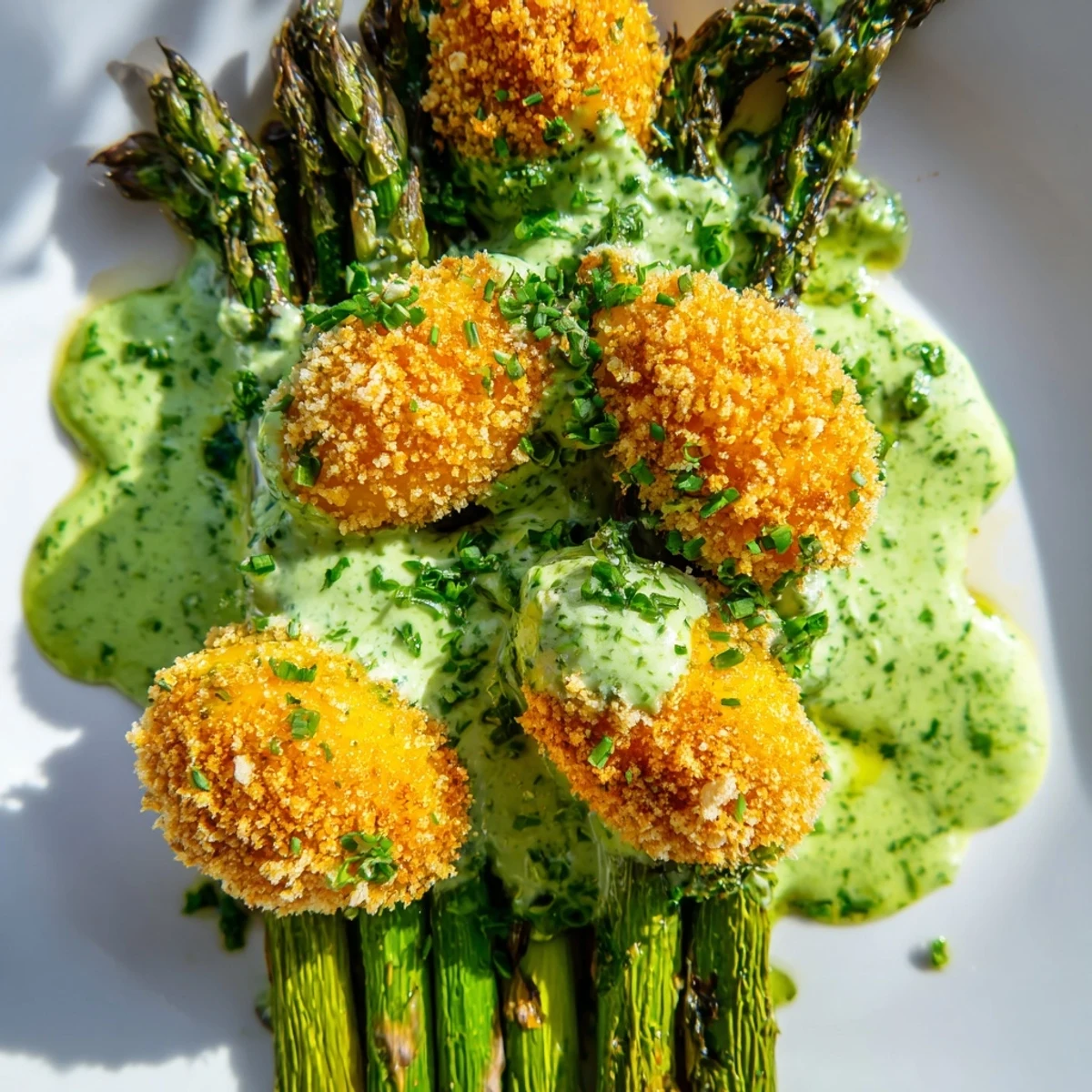
Save Transform simple ingredients into an elegant starter featuring deep-fried egg yolks with a delicate Parmesan breadcrumb crust. The golden exterior yields to a rich, velvety center that pairs beautifully with charred asparagus. A zesty herb sauce brings everything together with fresh parsley, chives, tarragon, lemon, and garlic. Perfect for dinner parties or special occasions when you want to impress without spending hours in the kitchen.
The sizzle of egg yolks hitting hot oil is one of those kitchen sounds that stops conversation dead. I discovered this dish at a small bistro in Lyon where the chef insisted the secret was freezing the yolks just long enough to hold their shape without turning into ice cubes. My first attempt at home resulted in yolks dissolving into the oil like sad little ghosts, but once I figured out the timing, these golden orbs became my most requested dinner party opener. The combination of shatteringly crisp coating and rich, barely set yolk dripping over charred asparagus is genuinely unforgettable.
My neighbor Catherine walked in unannounced one spring evening while I was testing this recipe, and she stood in the kitchen doorway watching me lower yolks into oil with the intensity of someone observing surgery. We ended up eating the entire batch standing over the counter, herb sauce dripping onto our chins, barely pausing to breathe between bites.
Ingredients
- 8 large egg yolks: Separate them carefully while the whites are still cold, as the yolks hold their shape better and are less likely to rupture during handling.
- 500 g green asparagus: Snap off the woody ends by bending each stalk naturally where it wants to break, which ensures you never serve a tough bite.
- 1 tbsp olive oil: Just enough to coat the asparagus for grilling without making it greasy or overpowering the delicate vegetable flavor.
- Salt and black pepper: Season the asparagus boldly because the egg yolks and herb sauce will mellow everything once assembled on the plate.
- 1/2 cup fine breadcrumbs: Fine crumbs create a more even crust that adheres better to the delicate yolk surface without creating thick patches that burn before the coating sets.
- 1 tbsp grated Parmesan: Adds a subtle savory depth to the coating that makes people wonder what your secret ingredient is.
- 1/4 cup fresh parsley: Finely chop it just before mixing to keep the bright green color from oxidizing and turning dark in the sauce.
- 2 tbsp fresh chives: Their mild onion flavor bridges the gap between the herbs and the sharpness of the lemon juice beautifully.
- 2 tbsp fresh tarragon: This is the herb that makes the sauce taste restaurant quality, with its subtle anise note that pairs perfectly with asparagus.
- 1 small garlic clove: One is enough here because raw garlic can easily hijack the entire sauce if you get heavy handed.
- 2 tbsp lemon juice: Fresh squeezed only, as the bottled version tastes flat and metallic next to the bright herbs.
- 1 tsp Dijon mustard: Acts as an emulsifier to keep the sauce from separating while adding a gentle heat that ties everything together.
- 1/2 cup extra virgin olive oil: Use a good quality oil here since it is the body of the sauce and its flavor really comes through.
- Vegetable oil for frying: Choose a neutral oil with a high smoke point so the yolks fry cleanly without any off flavors.
Instructions
- Whisk together the herb sauce:
- Combine the parsley, chives, tarragon, garlic, lemon juice, mustard, and extra virgin olive oil in a bowl, whisking vigorously until the mixture emulsifies into a vibrant green sauce that coats the back of a spoon. Taste and adjust the salt and pepper, then set it aside so the flavors can mingle while you prepare the rest.
- Separate and freeze the yolks:
- Crack each egg carefully and separate the yolks from the whites, placing the yolks on a plate lined with a light dusting of flour to prevent sticking. Slide the plate into the freezer for exactly 30 minutes, checking halfway through because you want them firm to the touch but not rock solid.
- Prepare the coating station:
- Mix the fine breadcrumbs with the grated Parmesan in a shallow bowl, stirring with a fork to distribute the cheese evenly throughout. Have this ready before you remove the yolks from the freezer because you need to work quickly once they come out.
- Coat the chilled yolks:
- Using a gentle hand, roll each partially frozen yolk in the breadcrumb mixture, pressing lightly to adhere the coating without crushing the delicate center beneath. Work one at a time and handle them as if they might break, because they absolutely will if you rush.
- Fry until golden and crisp:
- Heat vegetable oil in a small deep pot to 170 degrees Celsius, then carefully lower each coated yolk into the oil using a slotted spoon, frying for 30 to 60 seconds until the exterior is a deep shimmering gold. Transfer immediately to paper towels and resist the urge to poke them while they drain.
- Cook the asparagus:
- While the yolks are chilling in the freezer, toss the trimmed asparagus with olive oil, salt, and pepper, then grill or sauté over medium high heat for 5 to 7 minutes until the stalks are tender with charred spots that add a smoky sweetness.
- Assemble and serve immediately:
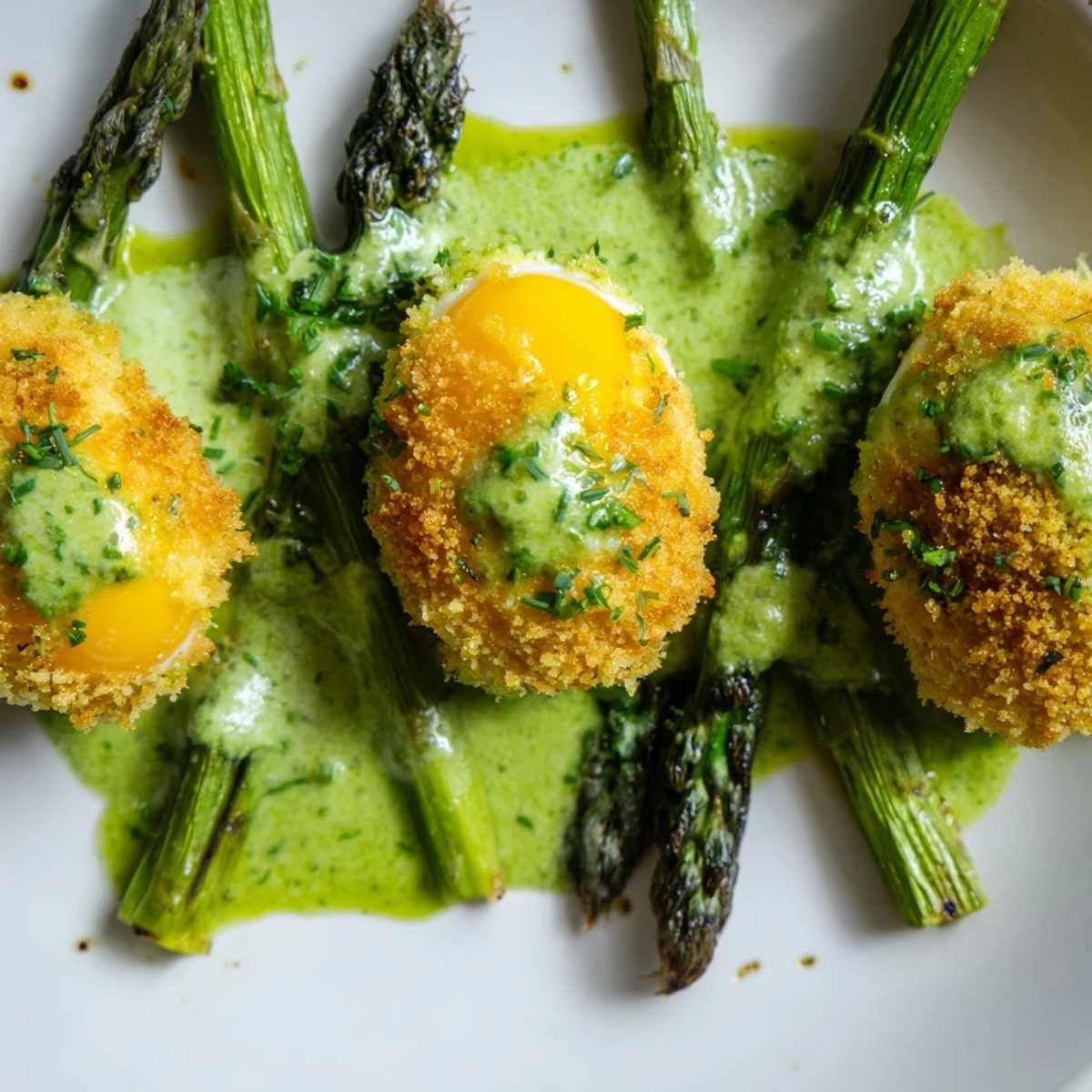
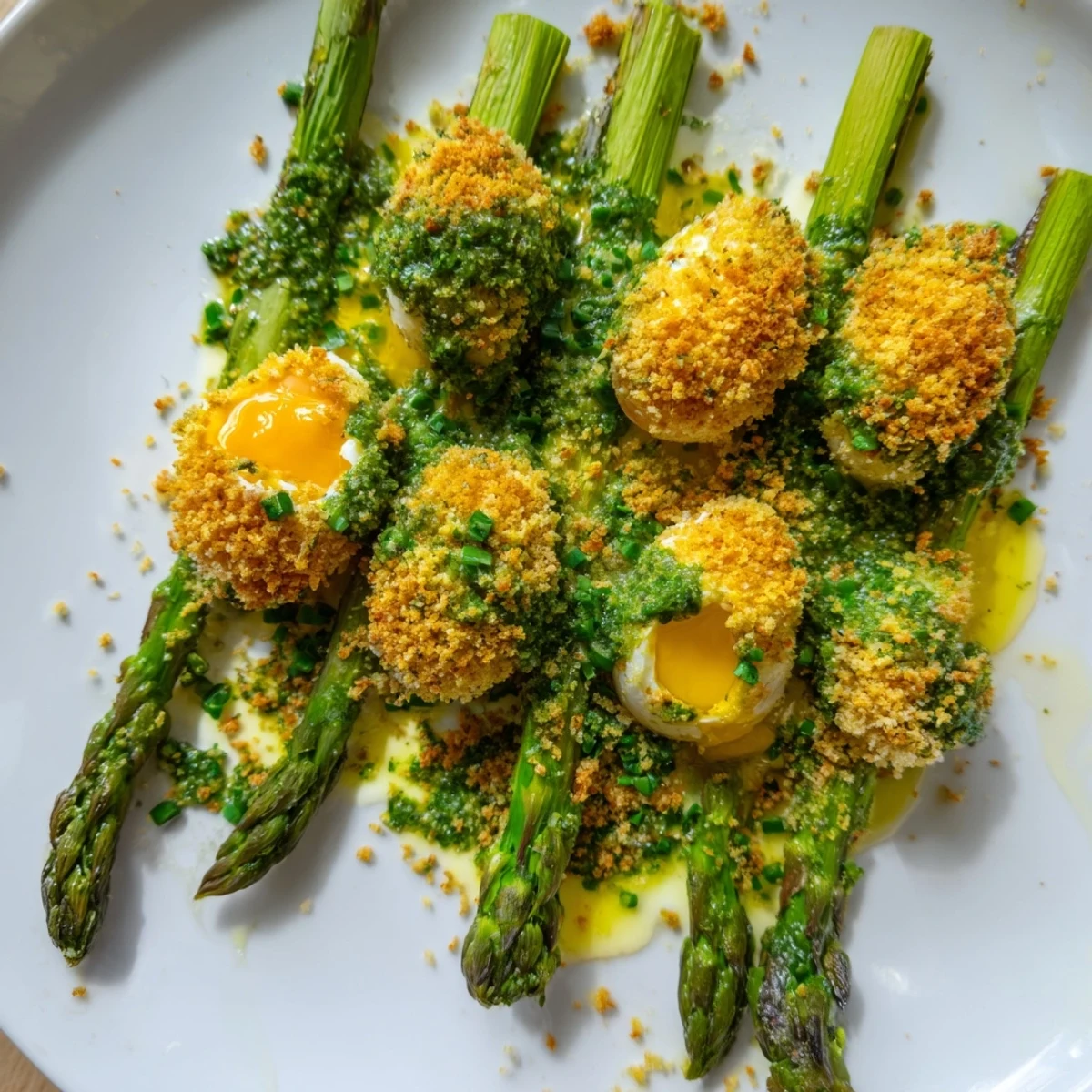
- Arrange the hot asparagus on warmed plates, gently place the crispy egg yolks on top, and drizzle the herb sauce generously over everything just before carrying them to the table. The yolks should be cut into while still hot so the liquid center flows over the asparagus like a natural sauce.
 Save
Save The moment a friend breaks open one of these yolks and watches the golden center pool onto the asparagus below, the room always goes quiet for a beat. That single second of shared wonder is worth every careful minute of separating and freezing and frying.
Swaps and Variations
Green beans and broccolini both work beautifully in place of asparagus when it is out of season, though you may need to adjust the cooking time depending on thickness. I once made this with roasted radishes in early summer and the peppery sweetness against the rich yolk was a happy accident I now repeat on purpose.
Baking Instead of Frying
If deep frying makes you nervous or you simply want a lighter version, bake the coated yolks on a parchment lined tray at 220 degrees Celsius for 4 to 5 minutes. The crust will not be quite as shatteringly crisp, but the yolk inside remains luxuriously runny and the dish loses none of its drama.
What to Serve Alongside
A glass of chilled Sauvignon Blanc or a dry Riesling is exactly what this dish wants beside it, the bright acidity cutting through the richness of the yolk and the herb sauce simultaneously. This appetizer also sits beautifully at the start of a spring dinner menu followed by something simple like roast chicken or grilled fish.
- Warm your plates in a low oven before assembling so the yolks stay liquid longer at the table.
- Have everything else completely ready before you start frying, because the yolks wait for no one.
- Double the herb sauce because you will want it on everything else you cook that week.
 Save
Save Cooking is at its best when a few humble ingredients become something that makes people lean back in their chairs and exhale slowly. This dish does exactly that, and you only need the courage to drop a yolk into hot oil to make it happen.
Recipe FAQs
- → How do I prevent egg yolks from breaking during frying?
-
Freeze the separated yolks for 30 minutes until firm but not completely solid. This creates structure while maintaining the creamy interior. Handle gently during coating and use a slotted spoon to lower them into hot oil.
- → Can I make this dish ahead of time?
-
Prepare the herb sauce up to 4 hours in advance and refrigerate. Coat and fry yolks just before serving for optimal crispiness. Asparagus can be grilled ahead and served at room temperature.
- → What's the best oil temperature for frying yolks?
-
Maintain oil at 170°C (340°F). Too cool and the coating absorbs excess oil; too hot and the yolk may overcook before the coating crisps. Use a kitchen thermometer for accuracy.
- → Can I bake instead of deep-fry the yolks?
-
Yes, arrange coated yolks on a parchment-lined baking sheet and bake at 220°C (425°F) for 4–5 minutes until golden. The texture will be slightly less crispy but still delicious.
- → What vegetables work well as substitutes for asparagus?
-
Green beans, broccolini, or roasted spears of zucchini all pair excellently with the rich yolks and bright herb sauce. Choose vegetables that hold their shape when cooked.
- → How can I tell when the yolks are perfectly fried?
-
The coating should turn golden brown after 30–60 seconds. The yolk should feel slightly soft when touched with tongs—this indicates the center remains creamy while the exterior is crisp.