
 Save
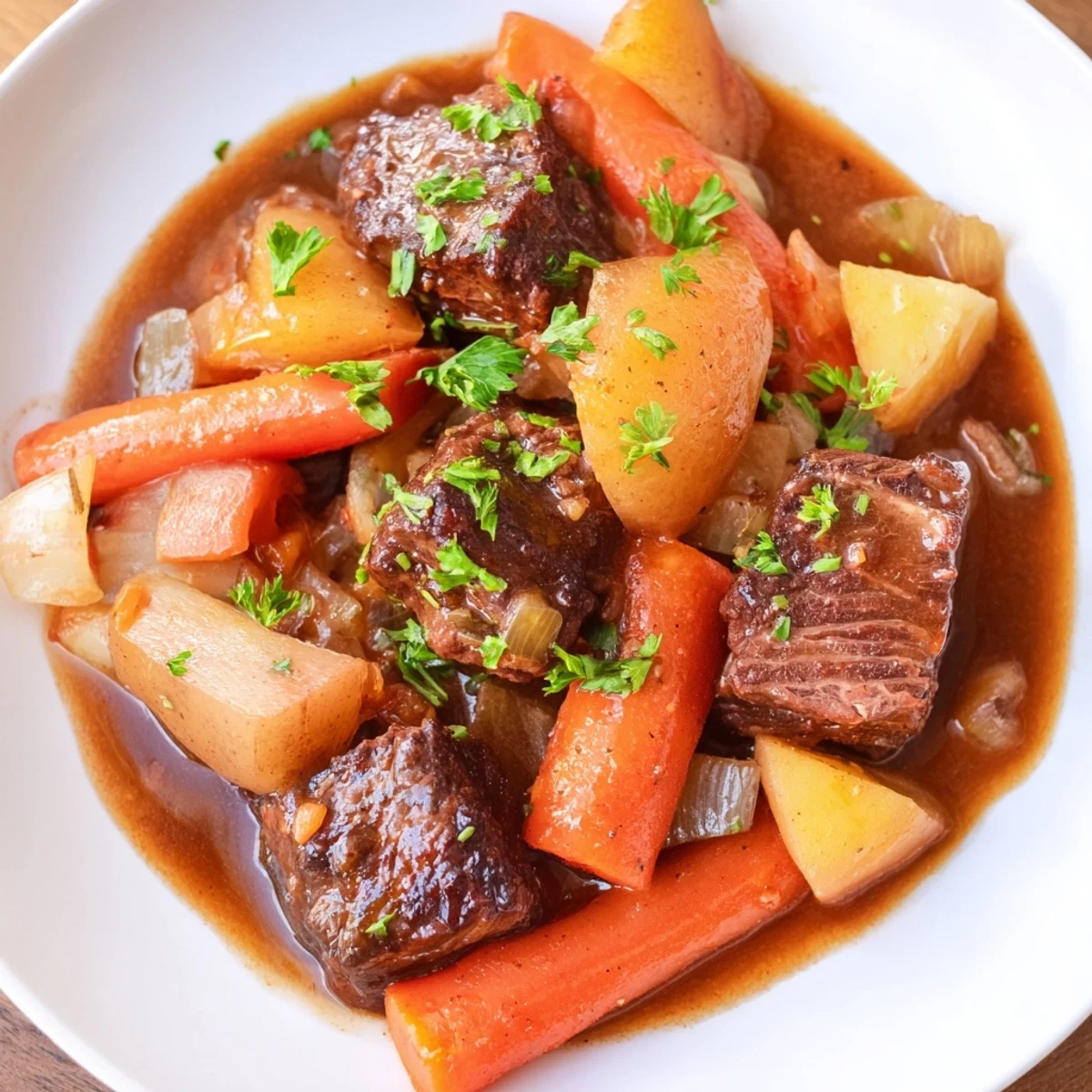
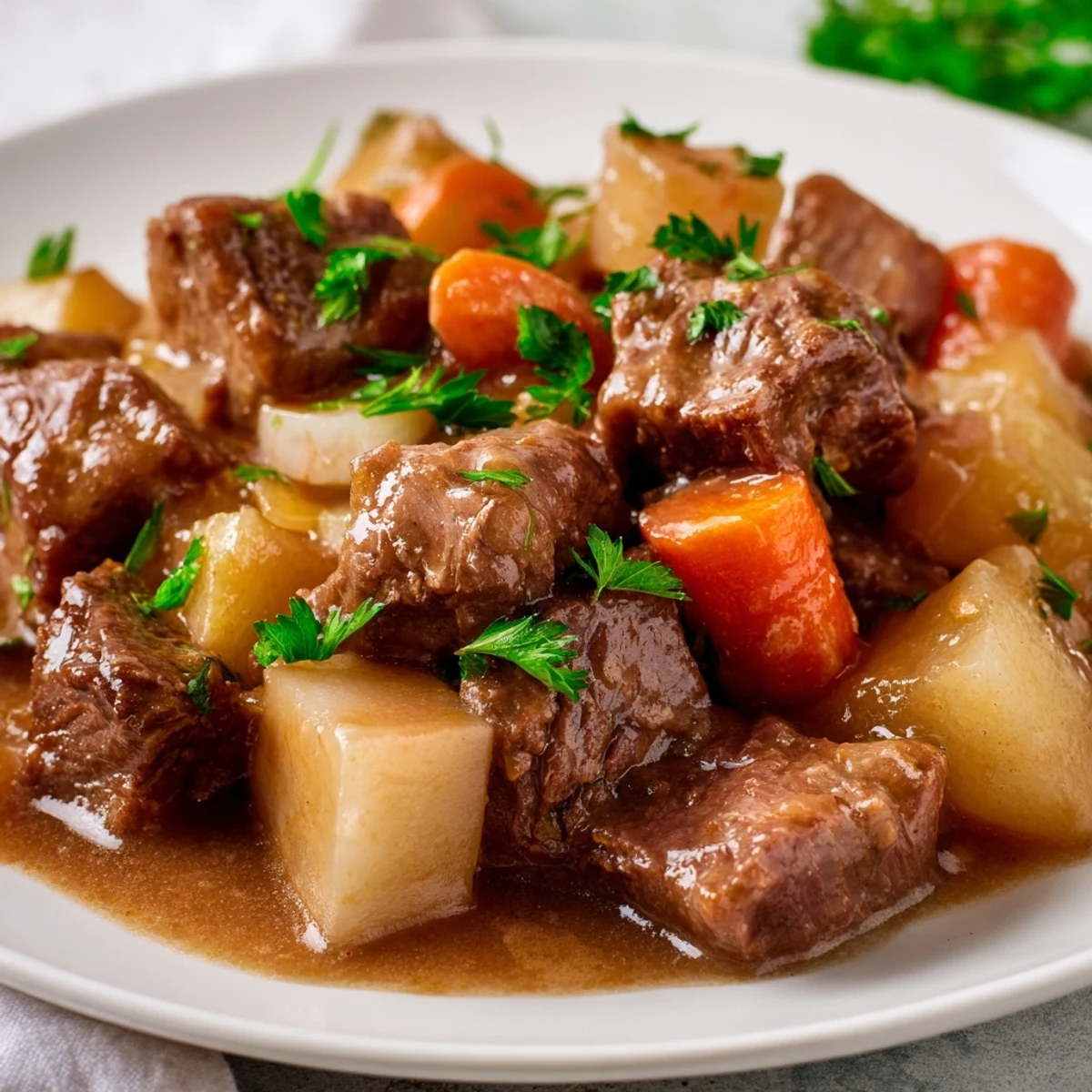
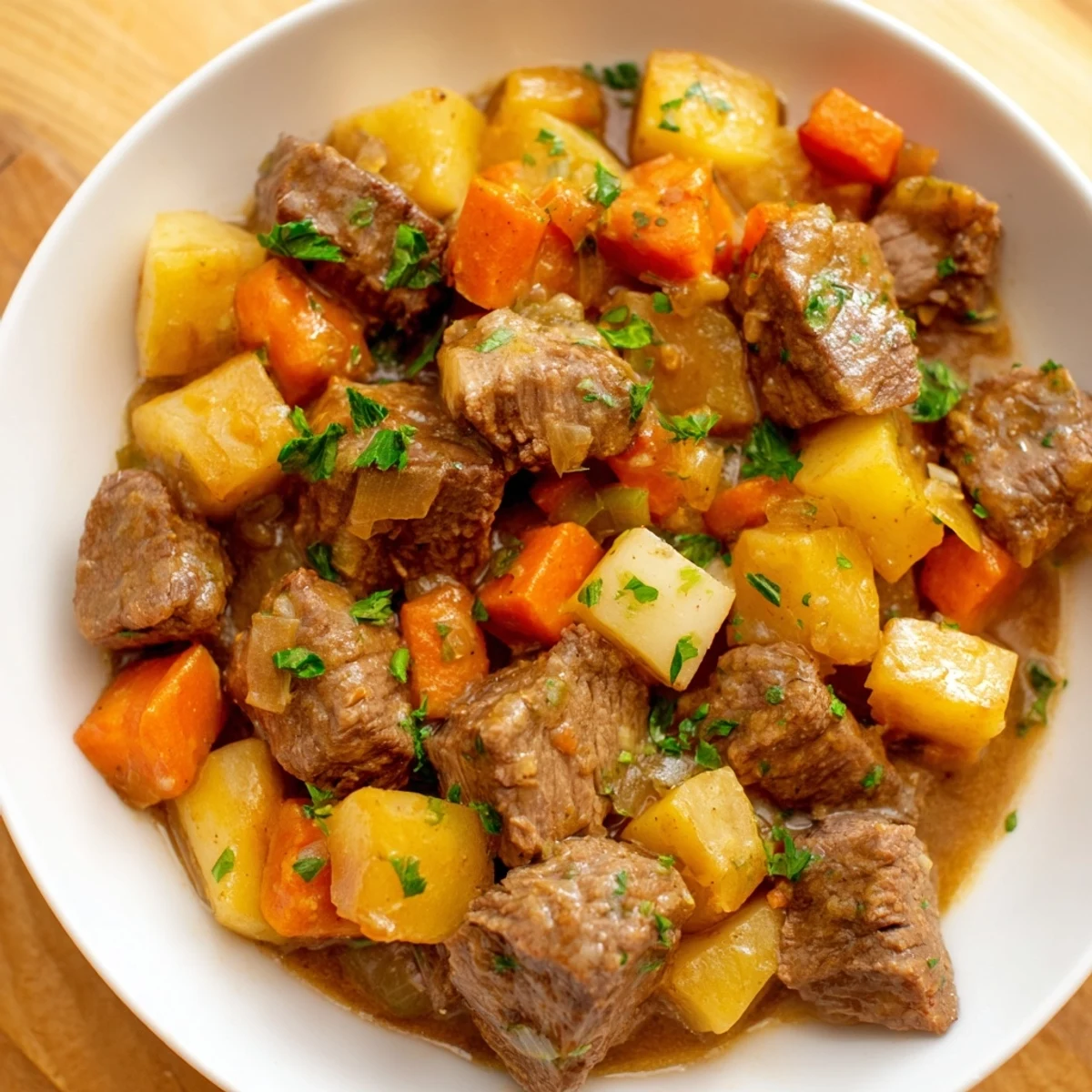
Save This dish features succulent beef chunks combined with carrots, parsnips, potatoes, celery, onion, and garlic. The ingredients simmer slowly in beef broth infused with tomato paste, red wine, Worcestershire sauce, and herbs. Cooking at low heat for eight hours results in tender meat and vegetables rich with layered flavors. Optional thickening with cornstarch ensures a smooth, hearty consistency. Garnished with fresh parsley, it makes a perfect comforting meal that can be paired with crusty bread or mashed potatoes.
I used to think slow cookers were only for people who had their lives together, the kind who meal-prepped on Sundays and owned matching storage containers. Then one January evening, I tossed cubed beef and chopped vegetables into mine out of sheer exhaustion, and eight hours later, my kitchen smelled like a French country inn. I've been a believer ever since.
The first time I made this for my family, my father-in-law, who never asks for seconds, quietly refilled his bowl twice. My mother-in-law leaned over and whispered that I'd finally made something that tasted like her childhood winters in Vermont. I didn't have the heart to tell her I'd mostly just chopped things and pressed a button.
Ingredients
- Beef chuck: This cut has just enough fat and connective tissue to break down into tender, flavorful bites after hours of slow cooking, and it's much more forgiving than lean cuts.
- Carrots: They add natural sweetness and hold their shape beautifully, even after eight hours, so cut them into generous chunks.
- Parsnips: These are the secret weapon, they taste like carrots' earthier, slightly nutty cousin and make the stew feel more sophisticated.
- Potatoes: Use any variety you like, but I prefer Yukon Gold for their buttery texture and the way they thicken the broth just a little as they cook.
- Celery and onion: The classic aromatic base that builds depth, and don't skip the garlic, it mellows into something sweet and rich.
- Beef broth: Low-sodium gives you control over the salt, and homemade or boxed both work, just make sure it's good quality because it's the backbone of the stew.
- Red wine: It's optional, but even a cheap bottle adds a layer of complexity and a subtle tang that balances the richness.
- Tomato paste: A little goes a long way, it adds umami and a hint of sweetness without making the stew taste like tomatoes.
- Worcestershire sauce: This is the ingredient people can never quite identify, but they always notice when it's missing.
- Thyme, rosemary, and bay leaves: Dried herbs are perfect here, they release their flavor slowly and won't turn bitter like fresh ones might.
- Cornstarch or flour: Only if you want a thicker, gravy-like consistency, otherwise the stew is perfect as-is.
- Fresh parsley: A sprinkle at the end brightens everything and makes it look like you tried harder than you did.
Instructions
- Prep the beef:
- Pat the cubes dry with paper towels, this helps them brown better if you're taking that extra step, and season generously with salt and pepper. Don't be shy, the seasoning needs to carry through all that liquid.
- Brown the beef (optional but worth it):
- Heat a large skillet over medium-high heat and sear the beef in batches until each side has a deep golden crust, then transfer to the slow cooker. This adds a layer of caramelized flavor that you can't get any other way.
- Load the slow cooker:
- Toss the carrots, parsnips, potatoes, celery, onion, and garlic right on top of the beef. There's no need to be precious about layering, it all mingles together beautifully.
- Mix the liquid base:
- Whisk together the beef broth, red wine, tomato paste, and Worcestershire sauce in a bowl until smooth, then pour it over everything in the slow cooker. The tomato paste can clump if you don't whisk it first, so take an extra moment here.
- Add herbs and cook:
- Drop in the thyme, rosemary, and bay leaves, give everything a gentle stir, then cover and set it to low for 8 hours. Walk away and let the slow cooker do what it does best.
- Thicken if desired:
- If you want a thicker stew, mix the cornstarch or flour with water to make a smooth slurry, then stir it in during the last 30 minutes of cooking. It'll thicken up as it heats through.
- Finish and serve:
- Fish out the bay leaves, taste the broth, and adjust the salt and pepper if needed, then ladle into bowls and top with fresh parsley. Serve it with crusty bread for soaking up every last drop.
 Save
Save One snowy Sunday, I made a double batch of this stew and delivered containers to three neighbors who'd just had babies. Two weeks later, all three asked if I'd teach them how to make it, and I realized this recipe had become my love language. It's the dish I bring when I don't know what else to say.
What to Serve With This Stew
I've served this over creamy mashed potatoes, alongside buttered egg noodles, and with nothing but a thick slice of sourdough for dipping. Honestly, it's sturdy enough to stand alone, but if you want to make it a full meal, a simple green salad with a sharp vinaigrette cuts through the richness beautifully. On colder nights, I'll toast some garlic bread and call it dinner.
How to Store and Reheat Leftovers
This stew keeps in the fridge for up to four days in an airtight container, and it somehow tastes even better on day two when the flavors have had time to marry. Reheat it gently on the stovetop over low heat, adding a splash of broth or water if it's thickened too much. You can also freeze individual portions for up to three months, just thaw overnight in the fridge and warm it up when you need a hug in a bowl.
Ways to Make It Your Own
I've swapped in turnips and rutabagas when I've run out of parsnips, added a handful of frozen peas in the last ten minutes for a pop of color, and even stirred in a spoonful of Dijon mustard for tang. Some people like to add mushrooms for extra umami, and I've seen friends toss in a cinnamon stick for a subtle warmth that's hard to place but impossible to forget. This recipe is forgiving, so trust your instincts and use what you have.
- Try adding a few sprigs of fresh thyme in the last hour for a brighter herbal note.
- Stir in a handful of pearl barley or farro at the beginning for extra heartiness.
- For a smoky twist, add a teaspoon of smoked paprika along with the other spices.
 Save
Save This stew has saved me on busy weeknights, impressed guests at casual dinners, and filled my kitchen with the kind of smell that makes everyone ask what's cooking. I hope it does the same for you.
Recipe FAQs
- → What cut of beef works best for this dish?
-
Beef chuck cut into cubes is ideal, as it becomes tender and flavorful after slow cooking.
- → Can I use other vegetables instead of the listed root vegetables?
-
Yes, turnips or rutabagas are great substitutes and add similar texture and flavor.
- → Is browning the beef necessary before cooking?
-
Browning the beef enhances flavor, but it's optional if you prefer a quicker prep.
- → How can I thicken the stew if desired?
-
Mix cornstarch or gluten-free flour with water to form a slurry, then stir it in during the last 30 minutes.
- → What garnishes complement this dish?
-
Fresh parsley adds a bright, herbaceous finish just before serving.
- → Can this be prepared gluten-free?
-
Yes, use gluten-free flour for thickening and verify Worcestershire sauce ingredients.