
 Save
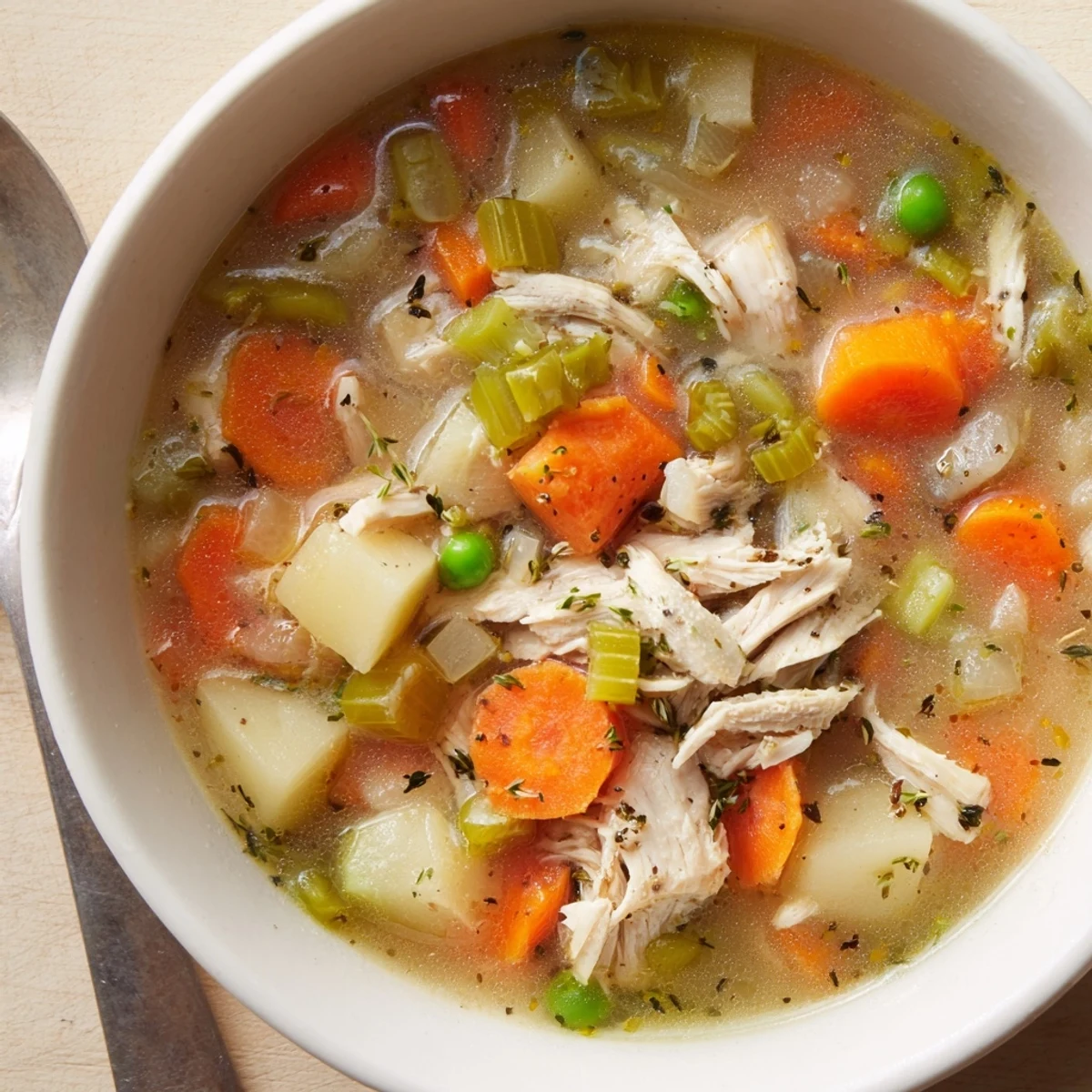
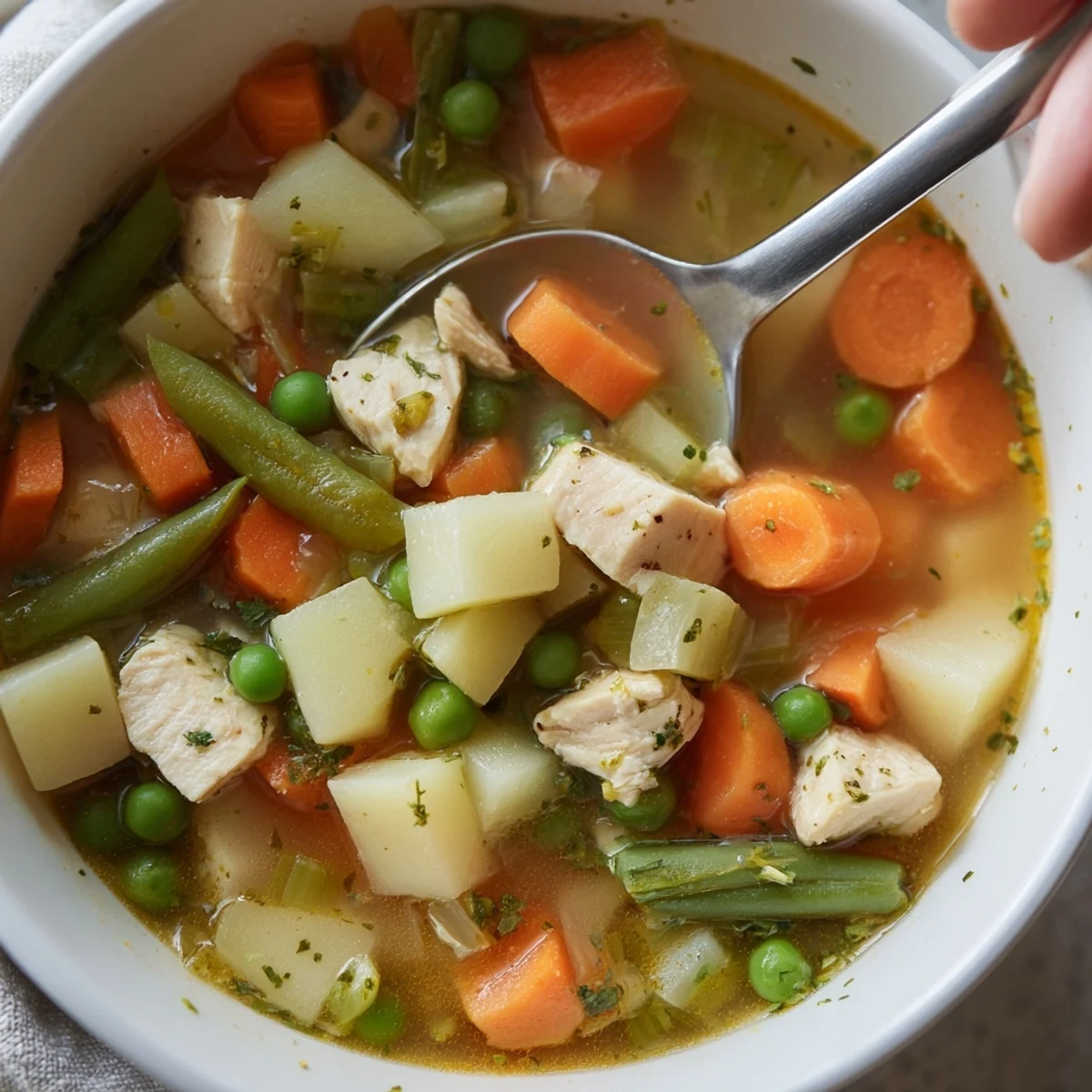
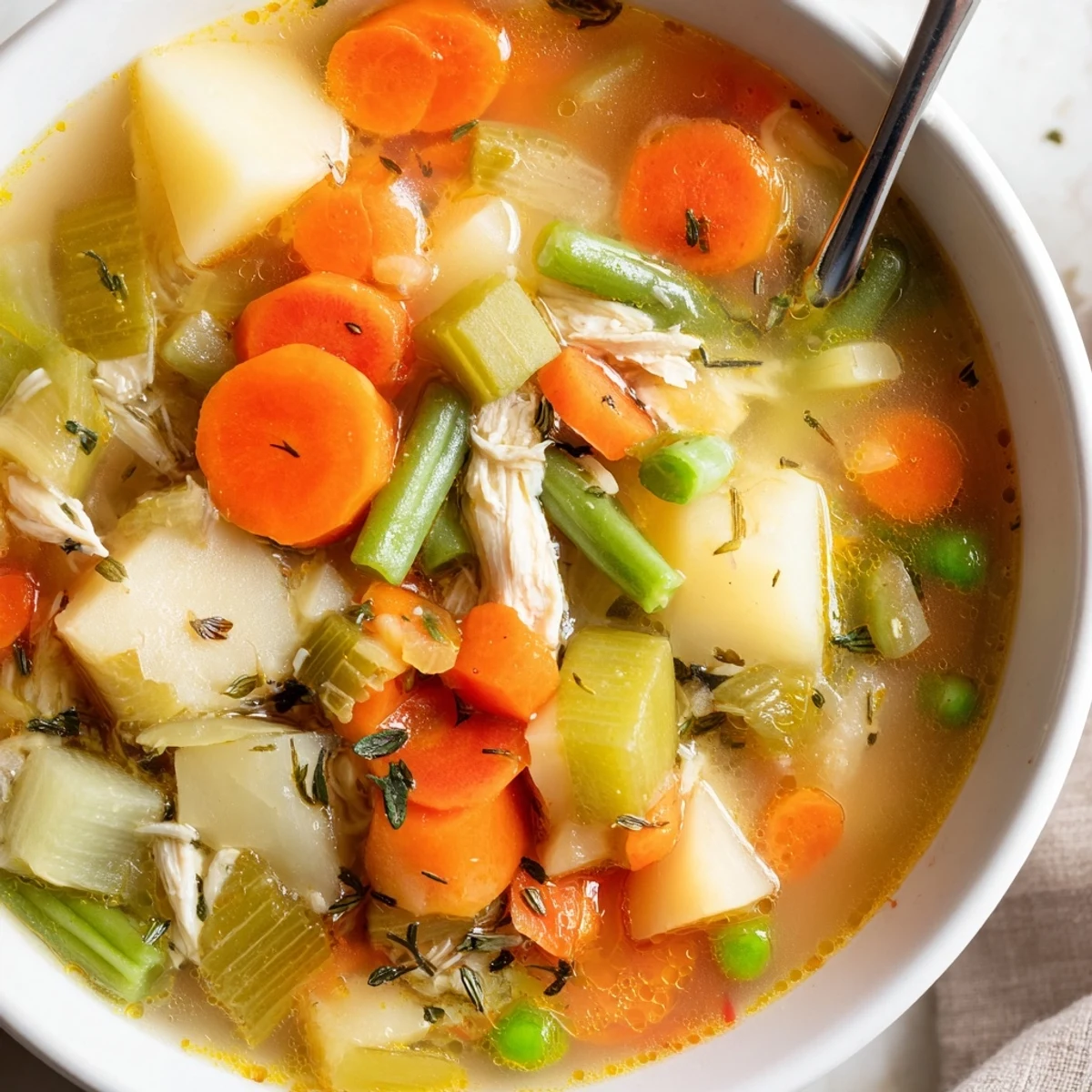
Save This nourishing dish blends tender chicken breasts with an array of fresh vegetables including carrots, celery, potatoes, green beans, and peas. Aromatic herbs like thyme, parsley, and bay leaf infuse the broth, creating a flavorful base. The cooking process starts with sautéing chicken and vegetables, followed by simmering in a low-sodium broth until all ingredients are tender. The result is a wholesome, comforting meal ideal for a cozy dinner or light lunch. Optional additions like noodles or rice can enhance heartiness, and fresh parsley adds a vibrant finish.
There's something about a steaming bowl of chicken vegetable soup that stops time—the kind of meal that tastes like someone cares. I learned to make this version years ago when a friend showed up at my kitchen with a cold, and I realized I'd been overthinking soup all along. The trick isn't fancy technique or rare ingredients; it's just good instinct and letting the vegetables do what they do best. This soup has saved countless afternoons and dinners since.
I made this soup for my neighbor last winter when she had the flu, and she texted me weeks later asking for the recipe. What stuck with me wasn't the thank you, but how she described it: like her grandmother's cooking, but easier. That moment taught me that home cooking doesn't need to be complicated to feel like love.
Ingredients
- Boneless, skinless chicken breasts (2, about 400g, diced): Dice them into bite-sized pieces so they cook through quickly and stay tender—avoid cutting them too small or they'll disappear.
- Carrots (2 medium, peeled and sliced): Sweet and sturdy, they're the backbone of vegetable flavor and worth taking time to slice evenly.
- Celery stalks (2, sliced): This might seem like background noise, but it's actually doing heavy lifting for flavor—don't skip it.
- Onion (1 medium, diced): The foundation that everything builds on; make sure it gets soft enough to lose its sharp bite.
- Potatoes (2 medium, peeled and diced): These make the soup feel substantial without weighing it down; waxy potatoes hold their shape better than starchy ones.
- Green beans (1 cup, trimmed and chopped): They add color and a slight textural difference that keeps soup interesting.
- Frozen peas (1 cup): Frozen is actually better here than fresh—they stay bright and don't overcook.
- Garlic (3 cloves, minced): This is your aromatic moment; that smell is your signal you're doing it right.
- Low-sodium chicken broth (7 cups or 1.7 liters): Low-sodium gives you room to adjust salt at the end, which is how you make soup taste like yours.
- Olive oil (1 tablespoon): Just enough to get things moving without making it rich.
- Dried thyme (1 teaspoon): Herbaceous and subtle; this is what makes it taste like comfort, not like a health food.
- Dried parsley (1 teaspoon): A gentler herb that adds brightness without shouting.
- Bay leaf (1): Always remove it before serving—I learned that the hard way years ago.
- Salt (1 teaspoon, adjusted to taste) and black pepper (½ teaspoon): Season as you go, tasting at the end so you get it right.
Instructions
- Brown the chicken gently:
- Heat olive oil in a large pot over medium heat and add your diced chicken. Let it sit for a minute before stirring—that's when you'll hear it start to sizzle, which means it's making a golden crust. After 3 to 4 minutes, it should look barely cooked on the outside, still pale in spots. Remove it to a plate.
- Build flavor with vegetables:
- In the same pot, toss in your onion, carrots, and celery. The oil is already flavored from the chicken, so these vegetables will soak that up as they soften. After 5 minutes, they should be tender enough to break apart with a wooden spoon. Listen for them to soften; you'll hear less sizzle and more a gentle, wet sound.
- Bloom the garlic:
- Add your minced garlic and cook for just about 1 minute—this is when the kitchen really smells like food. Don't let it brown or it turns bitter; you want that fresh, sharp garlic perfume.
- Bring everything together:
- Return the chicken to the pot and add potatoes, green beans, broth, thyme, parsley, bay leaf, salt, and pepper all at once. Stir so nothing sticks to the bottom, then let it come to a boil. You'll see bigger bubbles breaking the surface.
- Let it simmer:
- Once it boils, turn the heat down to medium-low and let it bubble gently for 20 minutes uncovered. The vegetables will start to soften and the chicken will finish cooking through. The house will smell incredible.
- Finish with peas:
- Add the frozen peas and simmer for another 5 minutes. They'll go from icy to tender in just that time, and they add a sweet, fresh note at the end. Check that the chicken pieces are white all the way through when you cut one.
- Taste and adjust:
- Fish out the bay leaf carefully. Take a spoon, taste the broth, and decide if it needs more salt or pepper—trust your palate here, not the recipe. Sometimes you'll need a pinch more, sometimes it's perfect as is.
- Serve warm:
- Ladle it into bowls and serve it as is, or top with fresh parsley if you have it. The steam rising off a bowl of this soup is honestly therapeutic.
 Save
Save What surprised me most about making this soup regularly is how it became a kind of permission structure—permission to cook something simple and still feel like I was doing something real. My kitchen is usually quiet, but when this soup is simmering, I feel less alone in there.
Why This Soup Works Every Time
The magic is in the order. You brown the chicken first, which builds a base of flavor in the pan. Then you soften the vegetables in that same pan so they pick up those little browned bits—chefs call this fond, and it's basically liquid gold. By the time everything comes together in the broth, you've already built multiple layers of taste. The simmer time lets those flavors get to know each other. There's no fancy footwork here, just simple technique that compounds as you go.
Making It Your Own
This soup is actually a canvas. I've made it with thyme and parsley as written, but I've also added a pinch of sage or swapped in fresh dill at the end. Some nights I brown the chicken with a sprinkle of paprika for something warmer. The vegetables are flexible too—I've used zucchini when carrots seemed tired, or added kale in the last few minutes if I had it. The structure stays the same; what changes is what you feel like making that day.
Storage and Second Meals
This soup actually tastes better the next day because the flavors have more time to meld. I usually let it cool at room temperature for about 20 minutes, then move it to containers in the fridge, where it keeps for about 3 or 4 days. For freezing, leave out the potatoes and add them fresh when you reheat, or they'll turn soft and sad. It freezes beautifully for up to 3 months, and thawing it overnight in the fridge is all you need.
- Cool soup completely before refrigerating so you don't raise the temperature of everything else in your fridge.
- Freeze in portions so you can grab one bowl's worth on a hectic night instead of thawing a giant batch.
- Reheat gently over medium heat with a splash of broth if it seems thick, letting it warm through without boiling.
 Save
Save This soup has taught me that the best meals are the ones you're willing to make again, and again, and again. That's when food stops being something you do and becomes something that's just part of who you are.
Recipe FAQs
- → Can I use bone-in chicken for this dish?
-
Yes, bone-in chicken thighs can be used for a richer flavor. Remove bones before serving for ease.
- → What vegetables are best for this preparation?
-
Carrots, celery, potatoes, green beans, peas, onion, and garlic provide a balance of flavors and textures.
- → How long should I simmer the mixture?
-
Simmer uncovered for 20 minutes, then add peas and cook an additional 5 minutes until everything is tender.
- → Is there a gluten-free option?
-
Yes, this dish is naturally gluten-free when using low-sodium chicken broth without additives.
- → Can I make this vegetarian?
-
Substitute vegetable broth and omit chicken, adding extra beans or lentils for protein.