
 Save
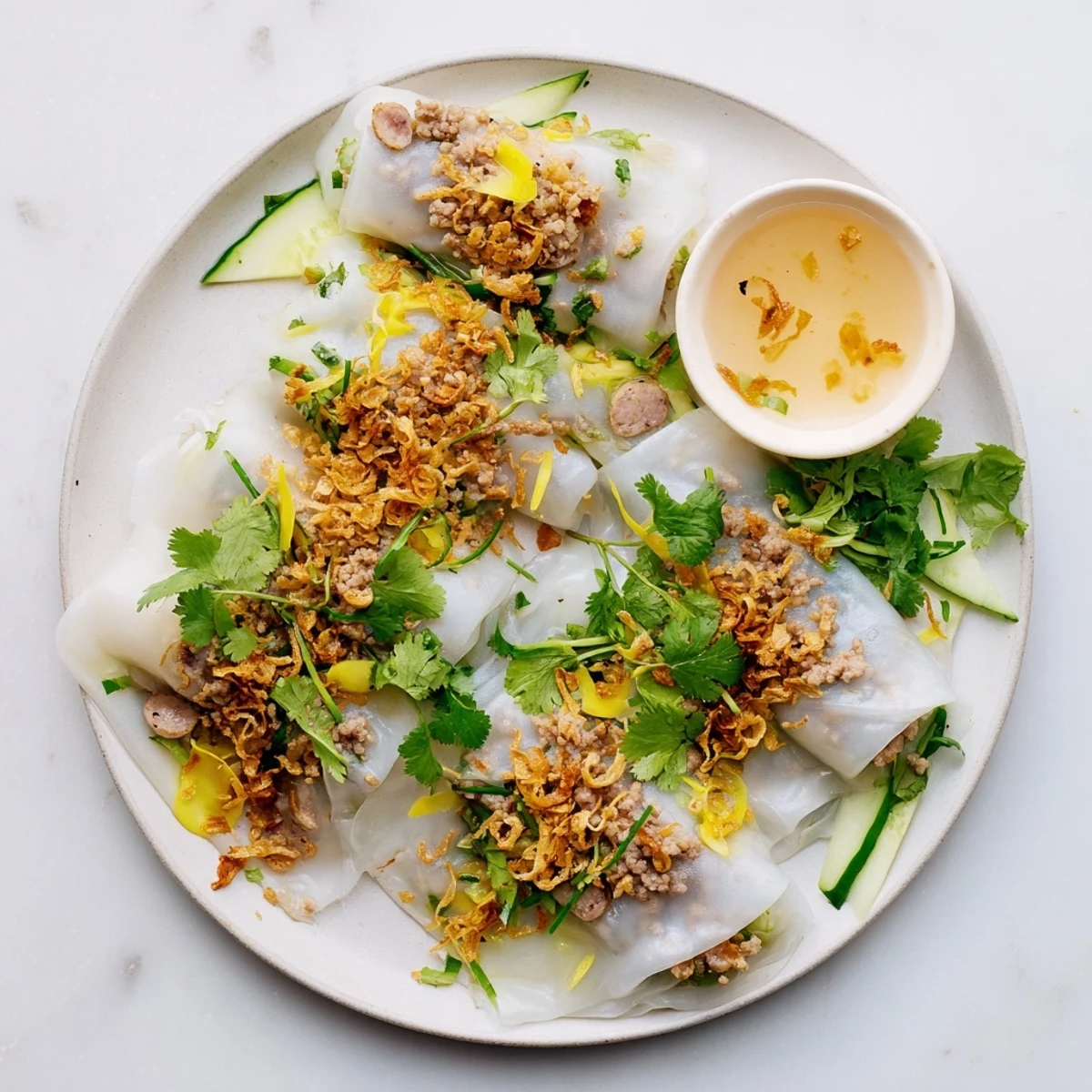
Save Create delicate, translucent rice sheets steamed to silky perfection, then filled with aromatic ground pork, earthy wood ear mushrooms, and fragrant onions. These Vietnamese rolls are crowned with crispy shallots, fresh cilantro, bean sprouts, and cucumber, then served alongside a bright, tangy nuoc cham dipping sauce that ties everything together. The batter rests for optimal texture, while the filling develops deep savory notes through proper seasoning and cooking techniques. Best enjoyed immediately while the rice sheets retain their signature silky texture and delicate mouthfeel.
My first taste of Banh Cuon was in a tiny Hanoi stall where an elderly woman worked with mesmerizing speed, her weathered hands flipping translucent rice sheets like silk ribbons. The steam rising from her bamboo steamer carried the scent of warm rice and savory pork, drawing me in before I even saw what she was making. Watching her craft each delicate roll with such practiced grace made me realize this wasn't just breakfast—it was art passed down through generations.
My cousin laughed when I attempted to make these for our family gathering, watching me struggle with the first few torn and misshapen sheets. But when I finally got the rhythm right and served those steaming rolls with the tangy nuoc cham, even my grandmother asked for seconds. Now Sunday mornings smell like lime, cilantro, and comfort in my kitchen.
Ingredients
- Rice flour: The foundation of that signature silky texture, though I've learned letting the batter rest makes all the difference between tender and tough
- Tapioca and cornstarch: These starches give the sheets their delicate translucence and just enough stretch to fold without tearing
- Ground pork and wood ear mushrooms: The classic combination that creates that perfect umami-rich filling, with mushrooms adding satisfying chew
- Fried shallots: Don't skip these—they're the crispy golden crown that adds essential texture and sweetness
- Fresh herbs: Cilantro, bean sprouts, and cucumber aren't just garnishes—they provide the bright fresh contrast that makes each bite sing
- Nuoc cham ingredients: This dipping sauce ties everything together with its perfect balance of salty, sweet, sour, and spicy notes
Instructions
- Make the batter:
- Whisk the rice flour, tapioca starch, cornstarch, salt, water, and oil until completely smooth, then let it rest for at least 20 minutes to hydrate properly.
- Cook the filling:
- Sauté onions and garlic until fragrant, add pork until browned, then stir in mushrooms, fish sauce, and pepper until everything's fragrant and fully cooked.
- Mix the dipping sauce:
- Combine fish sauce, lime juice, sugar, and warm water until dissolved, then add garlic and chili to your taste preference.
- Steam the rice sheets:
- Bring water to boil in your steamer, ladle a thin layer of batter onto the cloth, swirl to cover evenly, then steam 1 to 2 minutes until set and translucent.
- Roll them up:
- Gently lift the cooked sheet onto an oiled plate, add filling along one edge, and roll tightly—work quickly while the sheet is still warm and pliable.
- Bring it all together:
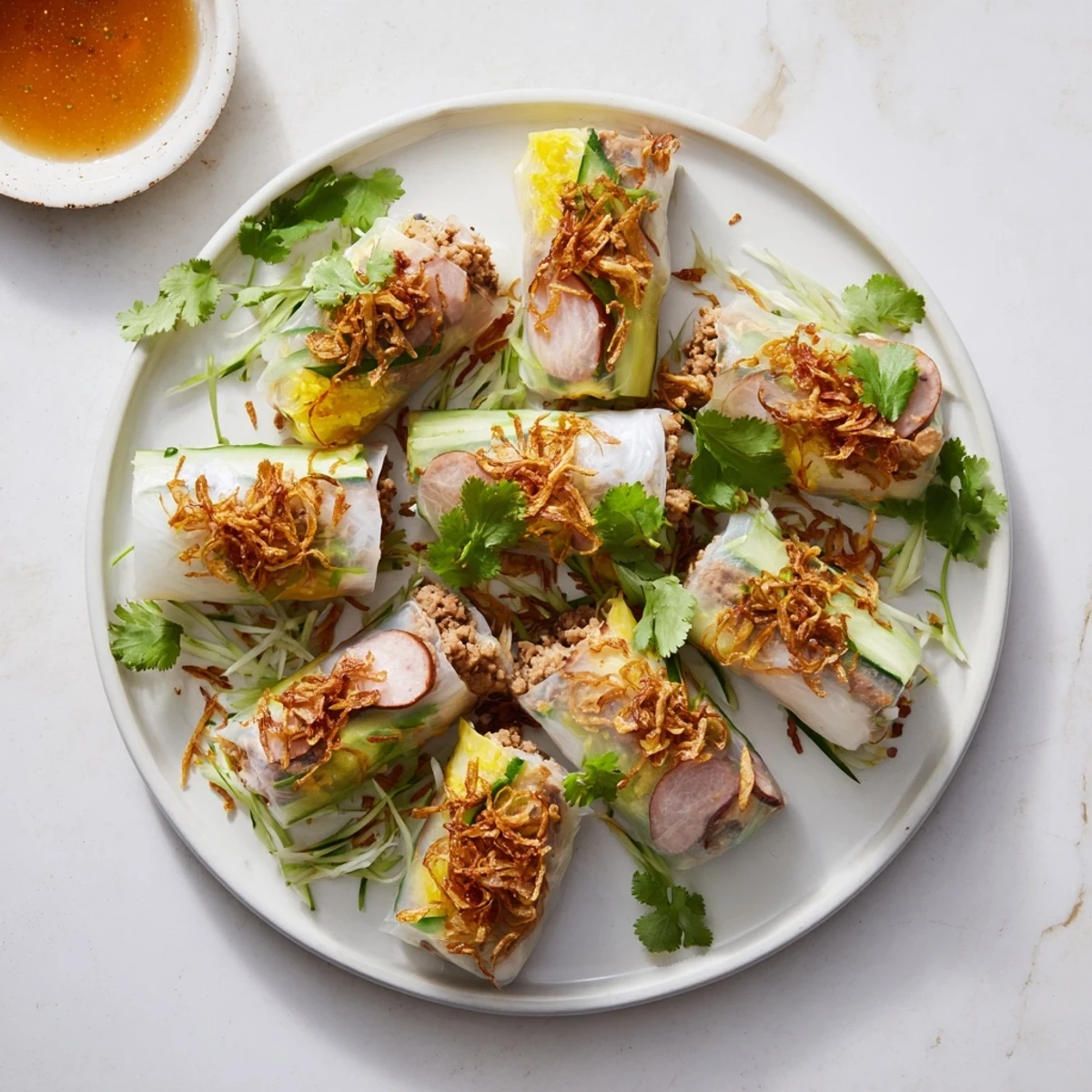
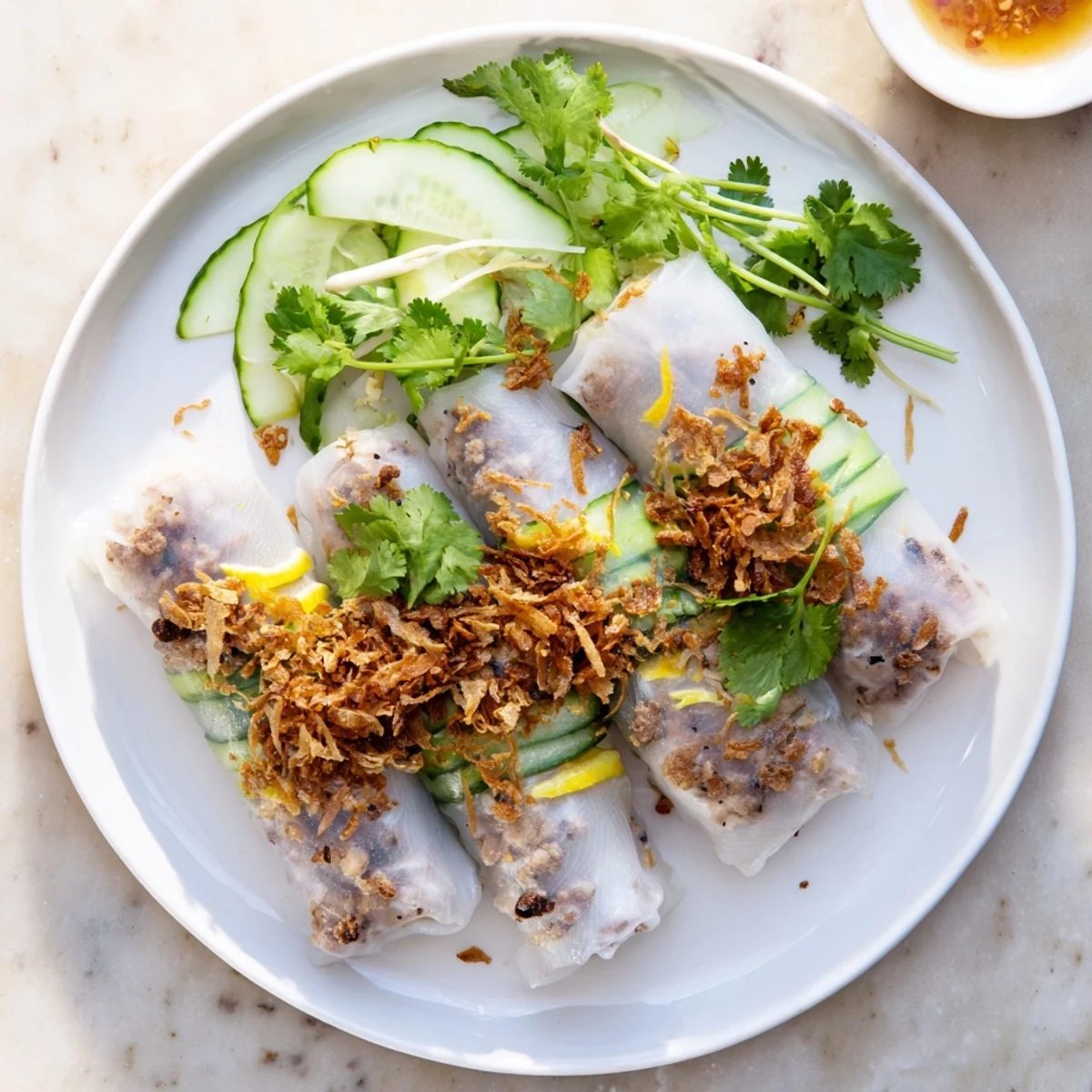
- Arrange rolls on a platter, scatter with shallots, herbs, bean sprouts, cucumber, and sausage, then serve immediately with nuoc cham on the side.
 Save
Save These rolls became my go-to comfort food after a terrible week at work, the rhythmic steaming and rolling somehow calming my frayed nerves. My roommate wandered into the kitchen drawn by the aroma and ended up staying to help roll, turning a lonely cooking session into an unexpected bonding moment.
The Art of the Rice Sheet
Mastering the rice sheet takes practice, and my first attempts resulted in more torn patches than perfect rounds. I learned that using a nonstick silicone mat or well-oiled cloth makes all the difference, and swirling the batter in one confident motion creates even thickness.
Customizing Your Filling
While the classic pork and mushroom filling is divine, I've discovered wonderful variations. Crumbled tofu with shiitake mushrooms makes an excellent vegetarian version, and adding a bit of minced shrimp elevates the filling into something truly special.
Make-Ahead Wisdom
Banh Cuon is best eaten immediately, but you can prepare components ahead for faster assembly. The filling keeps beautifully in the refrigerator for two days, and the dipping sauce actually improves after an hour as the flavors meld.
- Warm leftover sheets gently in the steamer before serving to restore their soft texture
- Never refrigerate assembled rolls—they'll become tough and lose their delicate quality
- Set up your garnish station before you start steaming so you can serve rolls immediately
 Save
Save There's something profoundly satisfying about making these delicate rolls yourself, each imperfect batch teaching you something new until suddenly you're creating something beautiful. Share them with people you love.
Recipe FAQs
- → What makes Banh Cuon different from other rice rolls?
-
Banh Cuon features uniquely delicate, translucent steamed rice sheets that are silkier and thinner than fresh spring roll wrappers. The batter combines rice flour with tapioca and cornstarch for that signature smooth, slightly chewy texture that sets it apart from other Vietnamese rice preparations.
- → Can I make the batter ahead of time?
-
Yes, the batter actually benefits from resting. You can prepare it up to 24 hours in advance and store it in the refrigerator. Just give it a good whisk before using, as the starches may settle. The resting period helps achieve that smooth, lump-free consistency essential for delicate sheets.
- → What's the secret to getting thin, translucent rice sheets?
-
The key is batter consistency—it should be thin like crepe batter, easily pourable. Use just enough to create a thin layer when swirling across your steaming surface. Steam covered for just 1-2 minutes until set and slightly translucent. Overcooking makes them tough and opaque rather than silky and delicate.
- → Can I substitute the ground pork filling?
-
Absolutely. For vegetarian versions, use crumbled firm tofu or seasoned mashed shrimp. Chicken or beef also work well as protein alternatives. Just ensure your filling is fully cooked and well-seasoned before rolling, and adjust fish sauce accordingly or use vegetarian alternatives.
- → How do I store and reheat leftovers?
-
Banh Cuon is best enjoyed immediately for optimal texture. If storing, layer rolls between parchment paper in an airtight container and refrigerate up to 2 days. Reheat gently by steaming for 1-2 minutes—microwaving may make the rice sheets rubbery. Store garnishes and sauce separately to maintain freshness and crisp textures.
- → What if I don't have a special steamer setup?
-
A nonstick skillet with a tight-fitting lid works beautifully. Lightly oil the pan, pour in batter, swirl to coat, cover, and cook over medium-low heat. The steam trapped inside creates the same effect as traditional steaming. Alternatively, use a regular steamer with oiled parchment paper or a silicone mat.